
Betekenis En Traditie Van De Bindi
Wat is een Bindi in de Context van Sieraden?
De bindi neemt een speciale plek in binnen de wereld van sieraden en persoonlijke versieringen. Traditioneel gedragen op het voorhoofd, tussen de wenkbrauwen, is dit kleine sieraad meer dan alleen een decoratie; het is doordrenkt van culturele, spirituele en sociale betekenissen.
De Culturele Relevantie van de Bindi
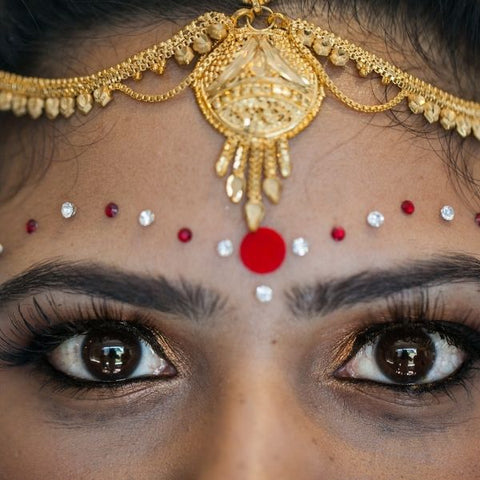
Oorspronkelijk bekend in Zuid-Aziatische culturen als teken van huwelijkse staat, wordt de bindi tegenwoordig door zowel mannen als vrouwen gedragen, ongeacht hun burgerlijke staat. Het kent verschillende vormen en stijlen, variërend van eenvoudige rode stippen tot ingewikkelde ontwerpen versierd met edelstenen en metallic folies. Zo blijft de bindi een levendig symbool van de esthetische rijkdom van culturele tradities.
Spirituele en Sociale Betekenis
In diverse spirituele tradities wordt de plek waar de bindi gedragen wordt beschouwd als het "derde oog", een centrum van spirituele kracht en wijsheid. Het dragen van een bindi op deze plek zou helpen om energie te concentreren en geestelijke helderheid te stimuleren. Naast deze spirituele aspecten heeft de bindi ook sociale implicaties en kan het een uiting zijn van persoonlijke identiteit en sociale affiliatie.
Bindi Materialen en Ontwerpstijlen
Net als andere sieraden, kan de bindi gemaakt worden van diverse materialen, zoals goud, zilver, kristallen en synthetische materialen. De keuze van materiaal en ontwerp hangt af van de gelegenheid, variërend van alledaagse gelegenheden tot formele ceremonies.
De Bindi in de Moderne Modewereld
De bindi heeft recentelijk zijn weg gevonden naar de westerse modewereld. Bekende mensen en mode-influencers hebben dit sieraad geïntegreerd in hun stijl, waardoor het een wereldwijde trend is geworden. Echter, deze integratie heeft ook discussies over culturele toe-eigening veroorzaakt, wat belangrijk is om rekening mee te houden bij het adopteren van dit traditionele sieraad in een nieuwe culturele context.
Conclusie
Of u nu de bindi beschouwt als een trendy accessoire of een diepgaand spiritueel symbool, het blijft een boeiend en veelzijdig element in de wereld van sieraden.