
Discover the magical beauty of pearls - Everything you need to know
Discover the Magical Beauty of Pearls - Everything You Need to Know
Step into the enchanting world of pearls and be amazed by their timeless beauty. Pearls have long been a symbol of elegance and luxury, and their unique luster and texture have fascinated people for generations. In this article, you will discover everything you need to know about these beautiful gemstones.
From the origin and formation of pearls to the various types and colors available, we take you on an informative journey through the world of pearls. Learn how pearls are cultivated, what the different gradings mean, and how to care for them to keep them in optimal condition.
Whether you are interested in pearls for jewelry or simply want to learn about their unique properties, this article is a must-read. Prepare to be enchanted by the magical beauty of pearls and let yourself be captivated by their timeless charm. Discover the world of pearls and let yourself be seduced by their luster and elegance.
What are pearls?
Pearls are natural jewels formed in the sea. They are unique because they are not gemstones mined from the earth, but instead, they are formed by living organisms that live in the ocean. Pearls are considered one of the most elegant and timeless jewels.
Pearls are formed by oysters and mussels that get small particles, such as grains of sand or shell fragments, inside their shells. To protect themselves from these irritating particles, the oyster begins to produce a layer of nacre, which eventually grows into a pearl. The process of forming a pearl can take several years, and the result is a beautiful shiny spherical gem.
Pearls come in various colors, sizes, and shapes, and they have been valued for centuries for their beauty and rarity. Whether it's a classic pearl necklace, a pair of pearl earrings, or an elegant pearl ring, pearls add a touch of sophistication and glamour to any outfit.
The history of pearls goes back thousands of years. They have been valued since ancient times and were a symbol of wealth and status. In ancient civilizations, pearls were considered gifts from the gods and were used as a commodity. Pearls were also popular with royalty and were often used to create royal jewelry.
In the 19th century, pearls became increasingly popular in the Western world. The discovery of pearl cultivation in Japan led to a greater availability of pearls, making them more affordable for a wider audience. Since then, pearls have remained a favorite choice for jewelry lovers around the world.
Types of pearls - natural, cultured, and imitation
There are different types of pearls on the market, including natural, cultured, and imitation pearls. Natural pearls are rarely found and are very valuable due to their rarity. They are formed without any human intervention and usually come from wild oysters.
Cultured pearls, on the other hand, are produced by human intervention. This process, known as pearl farming, involves inserting a piece of nacre or another irritant into an oyster or mussel, which initiates pearl formation. Cultured pearls are much more affordable than natural pearls and are available in a wide range of colors and sizes.
Imitation pearls are made of other materials and do not have the same natural beauty as real pearls. They can be made of glass, plastic, or other synthetic materials and are often used as an affordable alternative to real pearls.
How are pearls formed?
Pearls are formed when an oyster or mussel gets an irritating object inside its shell. To protect itself from the irritant, the oyster or mussel begins to produce a nacre layer, which eventually grows into a pearl. The process of pearl formation can take several years, depending on the type of pearl and the conditions in which the oyster or mussel lives.
The creation of pearls is a natural and complex process. It begins with the oyster or mussel detecting the irritant and starting to form the nacre layer around it. This layer consists of crystals of calcium carbonate, which build up in concentric layers, eventually forming the pearl.
The color of a pearl is determined by the type of oyster or mussel in which it is formed, as well as by the environment in which the oyster or mussel lives. Factors such as nutrition, temperature, and water quality can all affect the final color of the pearl.
The value of pearls - factors influencing the price
The value of pearls is influenced by various factors, including size, shape, color, luster, and purity. In general, the larger, rounder, and rarer a pearl is, the higher its price will be. Pearls with an intense color and high luster are also considered more valuable.
In addition, the origin of the pearl also affects the price. Pearls from well-known pearl farming regions, such as Japan, Australia, and Tahiti, are often valued higher due to their reputation and quality. The rarity of certain types of pearls, such as black Tahitian pearls, can also significantly increase the price.
It is important to note that the price of pearls can also vary depending on the jeweler and market conditions. It is always advisable to compare prices and do thorough research before purchasing pearl jewelry.
How to recognize real pearls?
Recognizing real pearls can sometimes be a challenge, especially since there are so many imitation pearls on the market. Here are some tips for recognizing real pearls:
- Feel the pearls: Real pearls usually feel cool to the touch, while imitation pearls often take on the ambient temperature.
- Check the shape: Real pearls usually have small imperfections or irregularities, while imitation pearls are usually perfectly smooth and uniform.
- Pay attention to the luster: Real pearls have a deep, rich luster known as orient. Imitation pearls usually have a shiny surface but lack the natural luster of real pearls.
- Examine the surface texture: Real pearls often have small pits, bumps, or grooves on their surface, while imitation pearls are usually smooth and perfect.
- Consult a professional: If you are still unsure, you can consult a professional, such as a jeweler or a gemologist, who can help you assess the authenticity of the pearls.
It is always advisable to buy pearls from a reputable jeweler and to ask for a certificate of authenticity if you have any doubts.
Maintenance and cleaning of pearls
Pearls are precious jewels that must be treated carefully to maintain their beauty and luster. Here are some tips for maintaining and cleaning pearls:
- Avoid contact with chemicals: Pearls can be damaged by chemicals such as perfume, hairspray, and cleaning products. Make sure to remove your pearls before using such products.
- Wear pearls last: Pearls can be scratched by other hard materials, such as metal jewelry. Wear your pearls last and remove them before putting on other jewelry.
- Store pearls separately: Store your pearls separately from other jewelry to prevent scratches and friction. You can store them in a soft cloth or a jewelry box to protect them from damage.
- Clean gently: Clean your pearls gently with a soft cloth or a damp cloth to remove dirt and oil. Do not use harsh cleaning agents or brushes, as these can damage the pearls.
- Let them breathe: Pearls need moisture to maintain their luster. Wear your pearls regularly to keep them hydrated and do not leave them stored for too long.
By regularly maintaining and carefully cleaning your pearls, you can ensure that they retain their beauty and last for generations.
Popular types of pearls - Akoya, freshwater, South Sea, and Tahitian
There are different types of pearls on the market, each with its own unique characteristics and beauty. Here are some of the popular types of pearls:
- Akoya pearls: Akoya pearls are known for their perfectly round shape and bright luster. They are usually cultivated in Japan and have a classic look that is perfect for formal occasions.
- Freshwater pearls: Freshwater pearls are cultivated in lakes, rivers, and ponds. They are available in various colors, shapes, and sizes, and are often used in affordable pearl jewelry.
- South Sea pearls: South Sea pearls are cultivated in the waters of Australia, the Philippines, and Indonesia. They are known for their large size and natural colors, ranging from white and cream to gold and silver.
- Tahitian pearls: Tahitian pearls, also known as black pearls, are cultivated in French Polynesia. They have a unique dark color, ranging from grey and green to deep black. Tahitian pearls are often considered one of the most valuable and rare pearls in the world.
Each type of pearl has its own unique characteristics and can be a beautiful addition to your jewelry collection.
The meaning and symbolism of pearls
Pearls have had various meanings and symbolism throughout history. They are often associated with purity, beauty, and wisdom. Pearls are also seen as a symbol of wealth and status, and are often associated with royal families.
In addition, pearls are often associated with romance and love. They are frequently chosen as gifts for special occasions such as weddings, anniversaries, and birthdays. Pearls are often seen as a sign of affection and appreciation.
Pearls are also associated with various zodiac signs and birthstones. They are often associated with the Cancer zodiac sign and are considered the birthstone for the month of June.
Whether you wear pearls as a personal symbol, as a fashionable accessory, or as a valuable investment, they always remain a timeless choice that exudes elegance and style.
Why pearls are always a timeless choice
Pearls have a magical beauty that is timeless. They have been valued for centuries for their unique luster and elegance. Whether it's a classic pearl necklace, a pair of pearl earrings, or a stylish pearl ring, pearls add a touch of sophistication to any outfit.
With their natural beauty and unique properties, pearls remain a timeless choice for jewelry lovers around the world. Whether it's for a special occasion or simply to treat yourself, pearls are an investment that will last for generations.
Step into the enchanting world of pearls and discover the magical beauty they have to offer. Let yourself be seduced by their luster, elegance, and timeless charm. Whether you are a lover of pearl jewelry or simply interested in their unique properties, pearls will certainly enchant you with their timeless beauty.
Everything you need to know about pearls
Pearls are a timeless classic. They have been valued for centuries as symbols of wealth, beauty, and romance. With their iridescent luster and unique shape, pearls are an essential part of any jewelry box. From pearl earrings to pearl necklaces, these beautiful gemstones can instantly transform any look from dull to chic. But what exactly is a pearl? What types of pearl jewelry are there? How do you choose the right pearls for you? In this blog post, we will cover all these topics so that you can make informed decisions when it comes to purchasing pearls and caring for your beautiful gemstones
What is a pearl?
A pearl is a gemstone with a hard shell consisting of calcium carbonate in the form of aragonite or calcite with an outer layer of conchiolin proteins or nacre. It is formed in certain mollusks such as oysters, mussels, and clams when an irritant such as sand enters the mollusk's shell. As a defense mechanism against the irritant, the mollusk secretes layers of nacre, which eventually form the beautiful jewel known as a pearl.
What are pearl earrings?
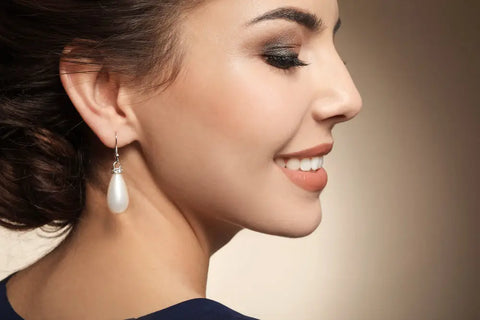
Pearl earrings are pieces of jewelry with one or more pearls hanging from earrings. These earrings come in many different shapes and sizes and can be made from freshwater pearls, Akoya pearls, South Sea pearls, Tahitian black pearls, and more. Pearl earrings are perfect for adding a touch of sophistication and elegance to any outfit. Whether you are looking for something subtle or want to make a statement with bold colors and shapes - there is something for everyone!
How are pearls made?
Pearls are formed by chance in certain types of mollusks when an irritant such as sand enters the shell. The mollusk then secretes layer after layer of conchiolin proteins to protect itself from the irritant, eventually forming what we know as a pearl over time. Depending on the type of mollusk they are made with (e.g., oysters or mussels), some types take longer than others to form fully grown pearls - from 6 months to 4 years!
What are the different types of pearls?
Akoya, Tahiti, South Sea pearls.
Akoya pearls are the classic round pearls that come from the Akoya oyster. They are the most popular type of pearl because they are relatively small (6-7 mm), have a lot of luster, and are the least expensive.
Tahitian pearls come from black-lip oysters in French Polynesia. They can be very large (up to 18 mm) and often have a distinctive "peacock" green, blue, or purple iridescence.
South Sea pearls come from larger oysters in Australian and Indonesian waters. They can be quite large (up to 20 mm), and are
What are freshwater pearls?
Freshwater pearls are formed when an irritant such as a piece of sand or a parasite enters the oyster. To protect itself, the oyster covers the irritant with nacre. This pearl formation process can take up to two years. More than half of all freshwater pearls sold today are cultured pearls. A small percentage (less than 5%) of natural pearls are still found in the world today.
What are synthetic pearls?
Synthetic pearls are made in a laboratory by coating a small plastic or glass bead with a cultured mother-of-pearl shell. They were first developed in the early 1920s as an alternative to natural pearls, which were becoming increasingly rare and expensive.
Today, synthetic pearls are more affordable than natural pearls and are often used in pearl jewelry. They are also sometimes used to imitate the appearance of more expensive natural pearls.
How do I choose the right pearl jewelry for me?
The first step is to figure out what kind of pearls you want. There are basically three types: Akoya, Tahitian and South Sea or as in most jewelry synthetic pearl jewelry
The next step is to decide on the size of the pearls. Smaller pearls tend to be more versatile and can match more outfits, while larger pearls are more dramatic and make a bolder statement.
Then it comes down to color. White pearls are classic and timeless, black pearls are trendy and edgy, while other colors can add personality to your look.
Finally, consider the setting. Should they be in a simple steel or silver chain? A delicate pearl necklace? A striking pearl bracelet? Or will you go for a trendy pair of earrings?
How do I care for my pearls?
To clean pearl jewelry, soak it in a bowl of lukewarm water mixed with a few drops of mild dish soap. Gently brush the pearls with a soft toothbrush to remove dirt. Rinse the pearls well and pat them dry with a soft cloth. If your pearls are very dirty, you can use a small amount of jewelry cleaner. Then rinse the pearls well and pat them dry with a soft cloth.
What is the difference between cultured and natural pearls?
Cultured pearls are created by implanting a small piece of oyster shell into the tissue of a living oyster. The oyster is then carefully monitored and regularly stimulated with irritants to induce the secretion of nacre.
Natural pearls, on the other hand, are formed when an irritant such as a parasite or a piece of grit gets trapped inside an oyster. To protect itself, the oyster covers the intruder with layers of nacre, until a pearl is eventually formed.
At Aramat Jewels you will find a wide collection of pearl jewelry with synthetic pearls. Shop them in all sizes and colors and have them delivered to your home for free.
Read also: Pearl jewelry: classic, modern and eternally chic