
Daith Piercing: Everything You Need to Know About Pain, Healing, and Jewelry
What is a daith piercing and why is it so popular?
A daith piercing is a cartilage piercing that goes through the inner fold of the ear, just above the ear canal. It's a striking and trendy piercing that is becoming increasingly popular — both as a stylish accessory and for its purported pain relief from migraines. Whether you're curious about its aesthetics or its potential benefits, this article has everything you need to know. Check out our piercings collection for stylish daith jewelry.
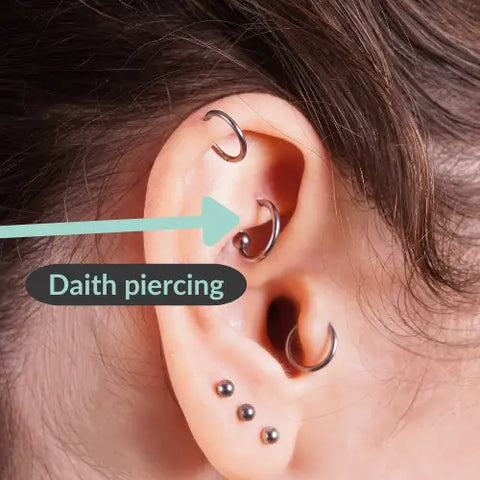
History and meaning of the daith piercing
The daith piercing has its origins in Celtic culture, where piercings were seen as adornment and protection. The name "daith" comes from Hebrew and means "knowledge." In Celtic tradition, the daith piercing was considered a piercing that balances mind and body. Today, it is primarily a popular fashion piercing with a unique position in the ear.
Daith piercing and migraine: does it work?
One of the most intriguing aspects of the daith piercing is the idea that it can offer relief from migraines and headaches. The theory is that the piercing applies pressure to specific acupressure points in the ear. However, there is no scientific evidence that this is effective. Many people do claim to have experienced relief, but the effect varies greatly from person to person. Always consult a doctor for persistent migraines.
The procedure: how is a daith piercing done?
A daith piercing is performed by a professional piercer in a sterile environment. The area is cleaned, and the piercer inserts a needle through the cartilage, after which the jewelry is attached. Due to the thickness of the cartilage in this area, the procedure is slightly more intense than a standard earlobe piercing. Always choose an experienced piercer for the best results and minimal pain.
Healing process and aftercare
The healing process for a daith piercing typically takes 6 to 12 months. In the first few weeks, there may be swelling, redness, and sensitivity. Aftercare tips:
- Clean the piercing daily with a sterile saline solution or special piercing cleaner.
- Do not touch the piercing with dirty hands.
- Avoid alcohol and peroxide — these dry out the skin and cause irritation.
- Do not twist or move the piercing during the healing process.
- Avoid swimming pools and hot tubs where bacteria can thrive.
Stylish jewelry for your daith piercing
There are countless stylish jewelry options available for a daith piercing — from simple rings to elaborate designs with dangling elements or stones. The most popular choices are seamless rings, horseshoe rings, and jewelry with zirconia or crystal accents. Opt for materials such as titanium or 925 silver for the best skin-friendliness, especially during the healing process. Check out our zirconia jewelry for elegant options. Combine your daith piercing with other cartilage piercings like a helix piercing for a stacked look.
Frequently asked questions about daith piercings
- Does getting a daith piercing hurt?
- Pain varies per person. Due to the thick cartilage in this area, it is slightly more intense than an earlobe piercing, but an experienced piercer can minimize the pain. Most people describe it as a short, sharp sting.
- Can a daith piercing help with migraines?
- There is no scientific evidence that a daith piercing is effective for migraines. Many people claim to have experienced relief, but the effect varies greatly. Always consult a doctor for persistent symptoms.
- How long does the healing process take?
- A daith piercing typically takes 6 to 12 months to fully heal. In the first few weeks, there is often swelling and sensitivity. Proper aftercare significantly speeds up the healing process.
- Can I change my daith piercing for other jewelry?
- Wait until the piercing is fully healed before changing jewelry — this takes at least 6 months. Always consult a professional piercer for advice on changing jewelry.
- What material is best for a daith piercing?
- Titanium and 925 silver are the best choices for a daith piercing, especially during the healing process. They are hypoallergenic and minimize the risk of irritation or allergic reactions.